HAMMAM · SAUNA · WORLD
Beauty rituals around the world: what hammam, sauna and bathing cultures can teach us
Marrakech and Helsinki do not need the same ritual to care about warmth, water and pause.
Japan and Korea add completely different rhythms again.
We travel through these ideas looking for inspiration, not a winner.
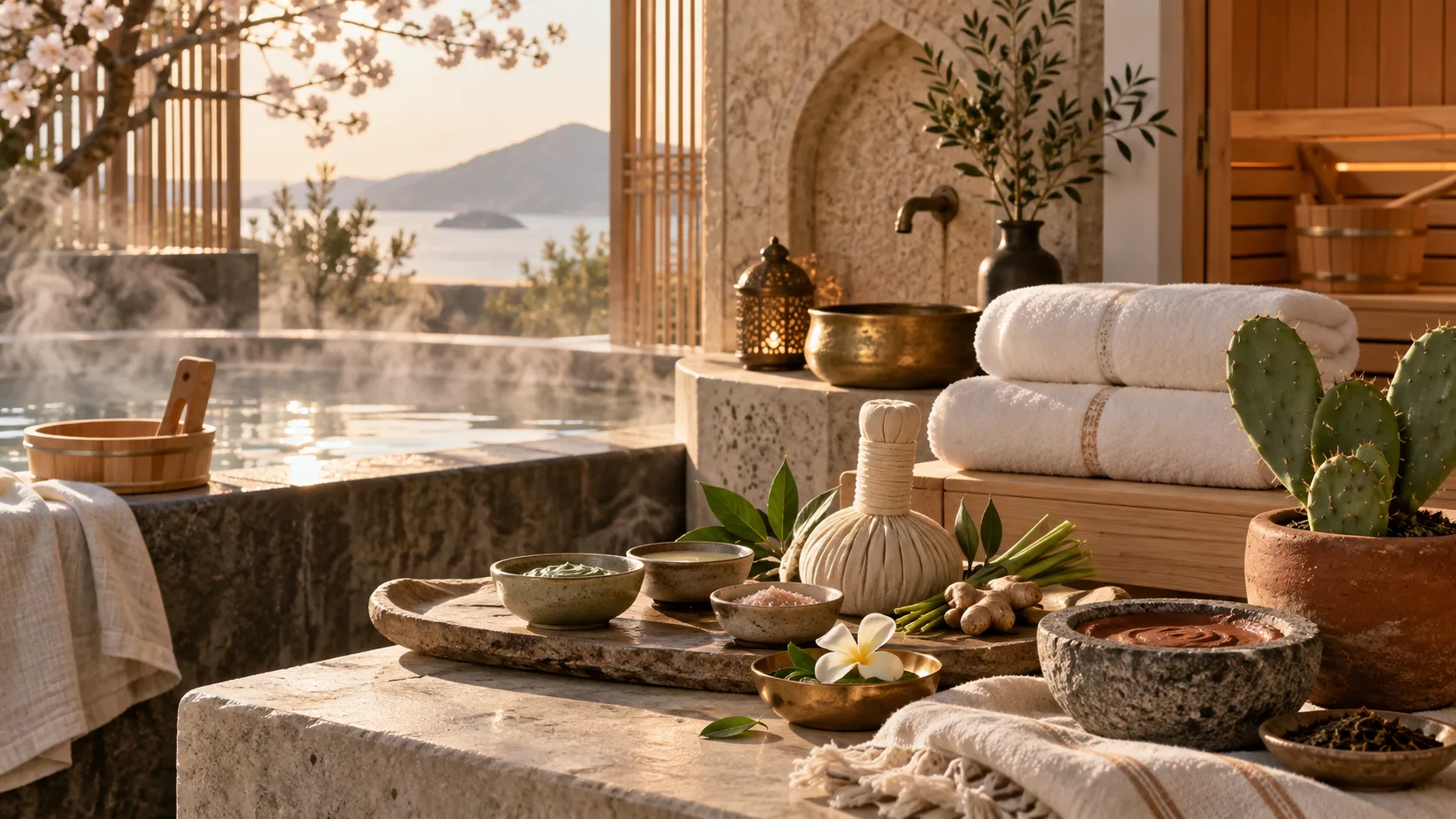
Warmth, water and care speak many languages
MARRAKECH
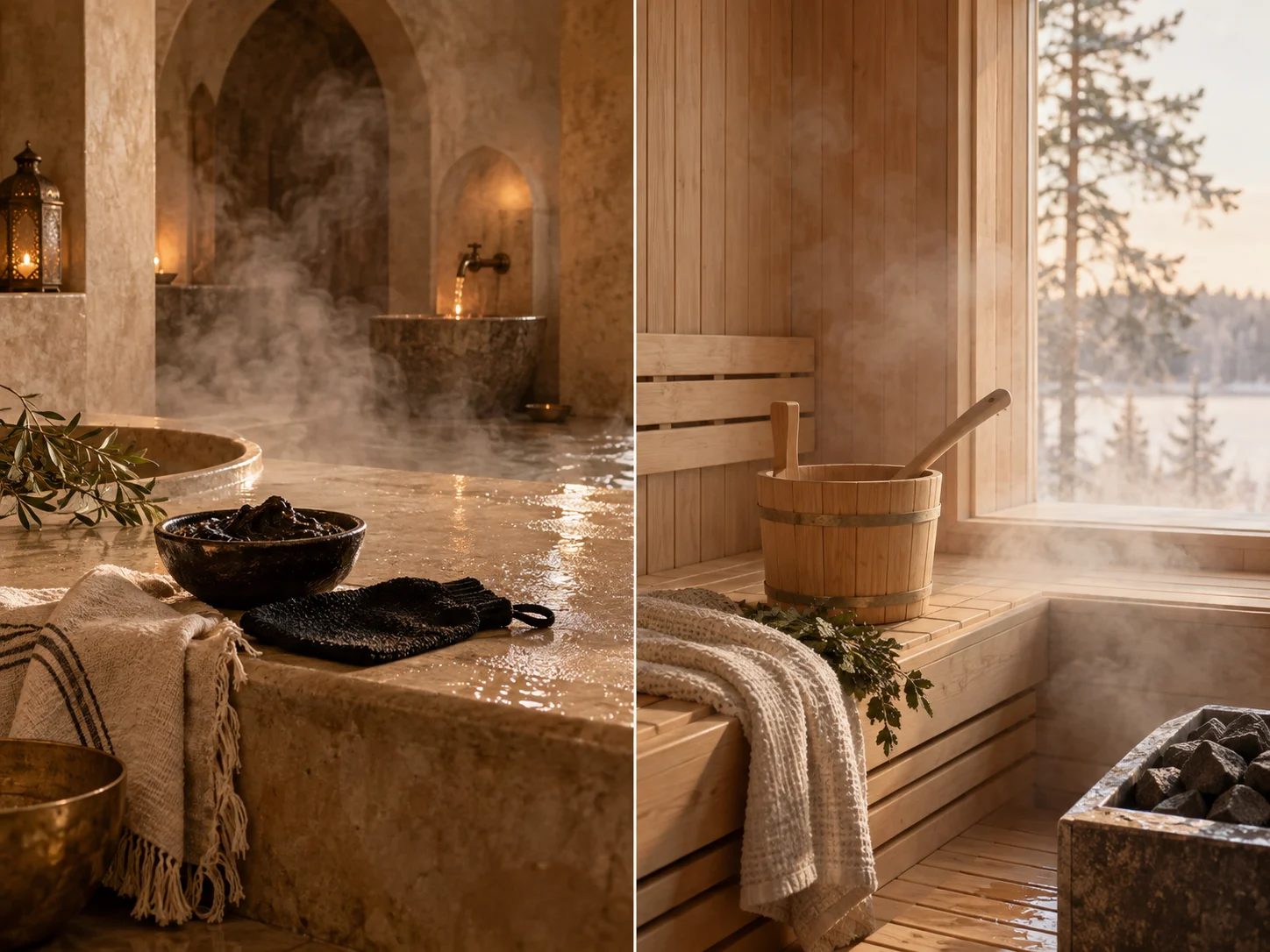
Hammam: wet heat, soap, scrub and time.
Morocco’s tourism office describes the traditional hammam as a ritual involving steam, washing, exfoliation and local materials such as black soap and ghassoul.
What interests us most is that body care has a sequence and a pace.
HELSINKI
Sauna: a different culture of heat.
UNESCO recognises Finnish sauna culture as intangible cultural heritage. Löyly, family transmission and social use are central to the tradition.
It is not simply ‘dry hammam’.
SWEAT
No detox theatre required.
Heat can feel relaxing and leave skin temporarily softer. That is enough.
We do not need to claim that sweat magically removes toxins from the body.
SCRUB
Traditional does not mean aggressive.
Hammam exfoliation can be vigorous. Sensitive or very dry skin may need a gentler interpretation at home.
Respecting your skin matters more than copying the exact intensity.
OIL AFTER WATER
A place where Éclorya naturally fits.
A few drops of argan oil on slightly damp skin can support softness and comfort*.
It is a simple bridge between bathing and botanical skincare.
JAPAN
Bathing with etiquette.
Japanese onsen culture reminds us that bathing can include rules, respect and shared space.
We take inspiration from the slowness, not a costume version of the culture.
KOREA
Attention rather than ten compulsory steps.
K-beauty is often summarised as layering. We prefer the underlying idea of observing the skin and choosing textures accordingly.
That principle travels well.
LONDON
What survives the world tour?
Maybe not a sauna, hammam, onsen and sheet mask all in one evening. Maybe just a longer shower, a clean towel, moisturiser and a little oil.
That is enough to make care feel intentional.
MANCHESTER
Rain outside, ritual inside.
Zouzou: ‘Does rain count as a free hammam?’ Mimi: ‘Absolutely not.’
Our humour can travel more freely than the traditions.
HEAT AND SKIN
Not everybody benefits from intense heat.
Rosacea, very reactive skin and certain medical conditions may make strong heat uncomfortable or unsuitable.
Wellness should never become a test of endurance.
NO WINNER
Hammam or sauna?
Different climates and communities created different rituals.
We would rather understand what each means than decide which one wins.
THE HOME VERSION
Inspiration does not require a spa ticket.
You can borrow the pace of a hammam or sauna without pretending to recreate the entire tradition at home. A warm shower, less rushing, a clean towel, gentle care and a little oil afterwards can make an ordinary evening feel deliberate.
RESPECT
Culture is more than a beautiful backdrop.
Hammam, sauna and onsen carry history, social rules and local meaning. We do not want to reduce them to tiles, timber and steam for a moodboard. It is more interesting to preserve the differences and take home only small ideas.
SKIN TYPE
The same heat does not suit everybody.
Rosacea, very reactive skin or eczema-prone skin may dislike strong heat and friction. A world-ritual article is not an instruction to try everything. Your own skin state remains more important than the visual appeal of the ritual.
AFTERWARDS
The simplest closing step is often the most useful.
After a shower or bath, pat rather than rub the skin. On slightly damp skin, moisturiser or a small amount of oil can support softness and comfort*. That is far easier to repeat than a complete spa programme.
THE WORLD AND BRITAIN
Contrast is what makes the story interesting.
Marrakech, Helsinki, Tokyo and a bathroom in London are not interchangeable places. Yet all can remind us that body care can involve time, warmth, water and attention without every ritual becoming the same routine.
NO DETOX
Heat does not need pseudoscience.
Sweating is a normal response to heat. We avoid claims that hammam or sauna removes toxins through the skin. These practices can be relaxing, social and sensory without needing a medical detox explanation.
IMAGES
Changing the order changes the whole page.
In the UK the world-ritual image may lead, while Norway starts with hammam and sauna. The same library keeps brand recognition; new image order, ALT text and storytelling create a genuinely local page.
MIMI AND ZOUZOU
Not everything needs a winner.
When Zouzou asks whether hammam or sauna is better, Mimi can answer that living traditions do not belong in a league table. The dialogue keeps the tone warm without turning culture into a gimmick.
FIFTEEN MINUTES AT HOME
A world-inspired ritual can be very small.
Five minutes in a warm shower, gentle cleansing, slower drying and then a suitable moisturiser or a few drops of oil* can be enough. The point is not to recreate a Moroccan hammam or Finnish sauna at home. It is to give an ordinary evening a clear pause and a little more attention.
HEAT IN MODERATION
Hotter is not automatically better.
Very high heat can be demanding for circulation and reactive skin. People with cardiovascular conditions, pregnancy or other medical concerns should follow appropriate health advice rather than wellness trends. Rosacea and highly sensitive skin may also prefer less heat. A ritual should feel restorative, not like an endurance test.
WORLD RITUALS
Travel without turning culture into a trend.
Is a hammam the same as a sauna?
No. They use heat and moisture differently and come from different cultural traditions.
Should everyone exfoliate after steam?
No. Sensitive skin may do better with less friction.
When can body oil be used?
After bathing on slightly damp skin it can support softness*.
Does sauna detox the body?
We do not use detox as a medical explanation.
* Cosmetic effects such as softness and comfort after bathing or oil use vary. Heat rituals and cosmetics do not replace medical advice.